
Engagement Strategies in the Classroom
That Re-Engage Disengaged Students
Student disengagement is one of the most persistent challenges educators face today. While the reasons vary—from academic gaps and confidence issues to lack of relevance or connection—the good news is that effective engagement strategies in the classroom do exist. In fact, educators across the country are already proving that disengaged students can be reconnected to learning when the right conditions are in place.
Recent thought leadership from education professionals highlights a consistent truth: student motivation rarely comes from a single tactic. Instead, engagement grows when instructional strategies, classroom culture, and technology-enabled learning environments work together intentionally. As a result, schools that align these elements are better positioned to sustain student engagement over time.

At GO Technology Group, we support schools throughout the Chicago area as an education technology partner. Consequently, we regularly see these same patterns play out in real classrooms. When engagement strategies are paired with sustainable implementation and ongoing support, the impact is far greater—and longer lasting.
What the Most Effective Engagement Strategies in the Classroom Have in Common
Although engagement techniques may look different from classroom to classroom, the most effective classroom engagement strategies share several common traits.
First, personalization and student choice play a critical role. When students are given opportunities to explore topics aligned with their interests, learning becomes more meaningful. As a result, students feel ownership over their work rather than viewing it as a task to complete.
Equally important is a sense of belonging. Students are far more likely to engage when they feel seen, supported, and valued by their teachers and peers. Therefore, relationship-building is not separate from academic success—it is foundational to it.
Additionally, interactivity and participation consistently drive engagement. Hands-on activities, collaboration, and discussion invite students into the learning process. Consequently, interactive learning environments help transform lessons from passive consumption into active involvement.
Finally, successful strategies emphasize small wins and confidence-building. When students experience progress—even incremental progress—their motivation increases. Over time, those early successes reshape how students see themselves as learners.
Practical Engagement Strategies Educators Can Apply in the Classroom Today
While philosophy matters, educators often ask how to apply engagement strategies in the classroom in practical, sustainable ways. Fortunately, small instructional shifts can make a meaningful difference.
Choice-based activities allow students to select topics, formats, or examples that resonate with their interests. As a result, participation increases because learning feels personal rather than imposed.
Collaborative problem-solving encourages peer interaction and shared responsibility. When students work together to explore solutions, they are more likely to remain engaged and invested in the outcome.
Visual and interactive learning tools help make abstract concepts more accessible. For example, manipulatives, shared displays, and hands-on digital activities support different learning styles and reinforce understanding when paired with interactive learning environments that are designed to support engagement rather than distract from instruction.
Gamified progress tracking, such as goal-setting or milestone recognition, helps students see their growth over time. However, these approaches are most effective when educators have access to IT support for educators that allows them to confidently use classroom tools without technical friction. Consequently, motivation improves as students experience consistent, achievable success.
Reflection and feedback loops give students space to assess their learning. Therefore, engagement deepens when students understand how effort connects directly to progress.
Why Classroom Engagement Strategies Often Break Down in Practice
While schools invest significant energy into improving engagement, challenges frequently arise during implementation.
For example, new instructional initiatives may be introduced without adequate training or follow-up. In other cases, classroom engagement technology is deployed but underutilized due to lack of confidence or time. As a result, well-intentioned strategies fail to reach their full potential.
Additionally, inconsistency across classrooms or buildings can undermine progress. When tools and approaches are not supported uniformly, student experiences vary widely. Over time, this inconsistency can erode trust in engagement initiatives altogether.

Therefore, sustainable engagement requires more than strong ideas—it requires systems that support educators long after the initial rollout.
How Technology Supports Engagement Strategies in the Classroom
Technology alone does not create engagement. However, when used purposefully, it can significantly amplify effective instruction and help schools engage students with technology in meaningful ways.
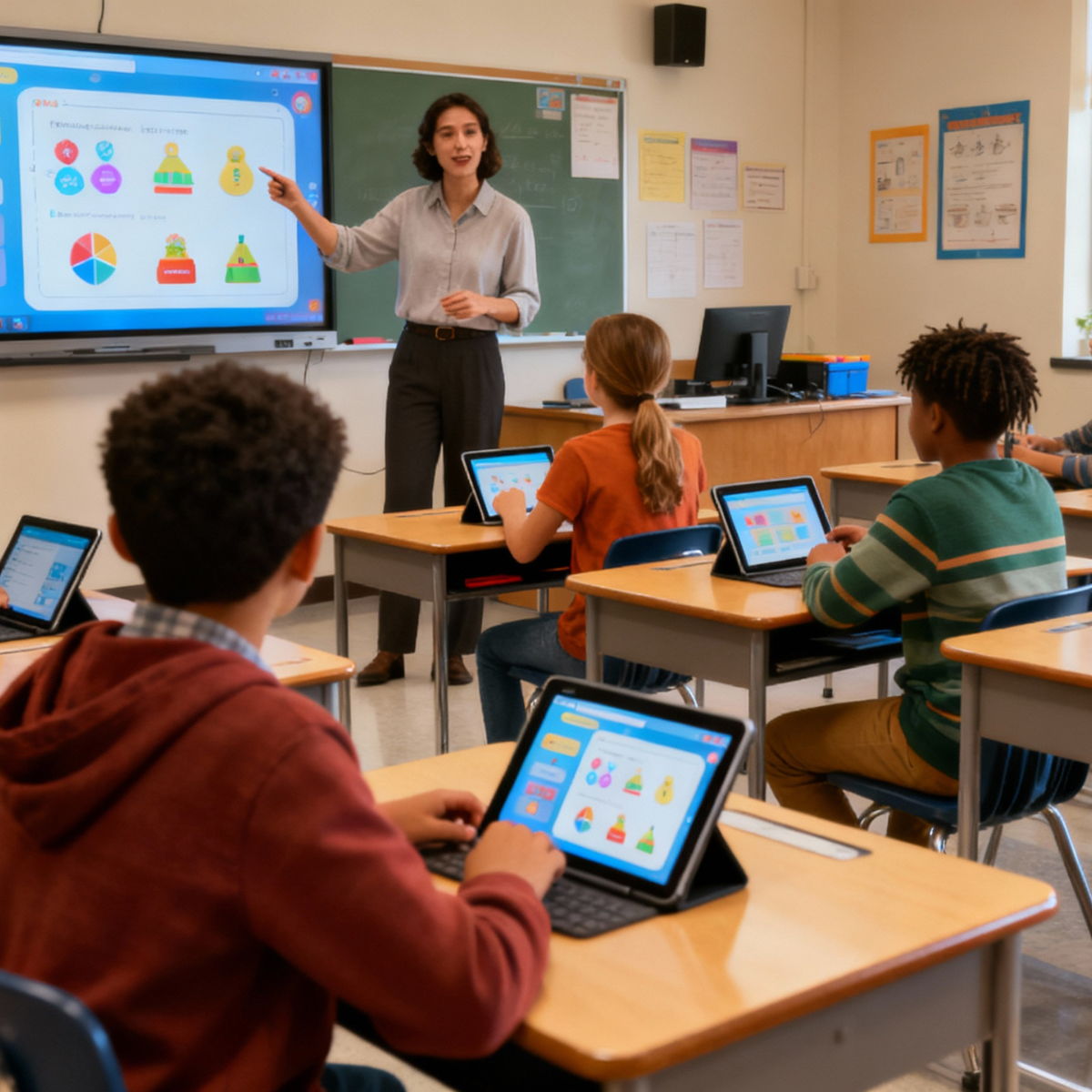
Interactive learning tools—such as smartboards and collaborative display panels—allow abstract concepts to become tangible. For instance, visual manipulatives and interactive exercises can help students explore challenging material in ways that feel accessible and achievable.
Moreover, technology can foster collaboration. Shared problem-solving activities encourage peer interaction, discussion, and teamwork. As a result, learning becomes a collective experience rather than an isolated one.
Importantly, sustainability student engagement depends on consistency. When technology is reliably supported and thoughtfully integrated into instruction, educators are more confident experimenting with new approaches. Therefore, engagement strategies are more likely to scale and endure across classrooms.
Why Implementation and Support Matter More Than Tools in the Classroom
One of the most common misconceptions in education technology is that purchasing the right tools will automatically lead to better outcomes. In reality, long-term success depends on how those tools are implemented, supported, and maintained.
Without reliable infrastructure, consistent updates, and responsive support, even the best classroom technology can become a source of frustration. Schools that invest in managed IT services for education organizations are better positioned to maintain consistency, reliability, and instructional momentum across classrooms. Conversely, when educators know they have dependable support, they are more willing to innovate and refine their engagement strategies.
Furthermore, ongoing training and guidance help ensure that engagement initiatives evolve alongside instructional needs. Access to strategic IT consulting for schools helps education leaders align technology planning with long-term engagement goals rather than short-term fixes. Therefore, schools that prioritize support are better positioned to sustain momentum and adapt over time.
A Note for School and District Leaders on Classroom Engagement
For school and district leaders, engagement strategies in the classroom are most effective when paired with clear expectations and dependable systems. When educators are supported with consistent technology and responsive guidance, instructional initiatives are more likely to succeed. As a result, leadership alignment plays a critical role in sustaining engagement across buildings and grade levels.
Frequently Asked Questions About Engagement Strategies in the Classroom
What are the most effective engagement strategies in the classroom?
The most effective engagement strategies in the classroom focus on personalization, collaboration, interactivity, and confidence-building. When students feel connected to the material and supported through consistent systems, engagement improves naturally.
How does technology support student engagement without becoming a distraction?
Technology supports engagement when it aligns with instructional goals rather than driving them. Interactive learning environments, when implemented thoughtfully, enhance participation while keeping learning outcomes at the center.
Why do engagement initiatives fail in some schools?
Engagement initiatives often struggle due to inconsistent implementation, limited training, or lack of ongoing support. Without sustainable systems in place, even strong strategies can lose momentum over time.
As Featured In
GO Technology Group was featured in 8 Creative Methods for Motivating Disengaged Students by Teacher’s Instruction for its perspective on using interactive classroom technology to re‑engage learners. This recognition reflects GO’s experience supporting schools as they implement and sustain technology that enhances student engagement, collaboration, and confidence—ensuring instructional tools are not only installed, but effectively supported in real classroom environments.
Trusted By Leading Chicago Industries
See why our clients trust us to handle their most critical IT needs.
"GO managed the whole process and pushed on our vendors to find other means to get things done."
- Donna C. -
Office Leasing
"They explained technology so it was easy to understand-this gave me the confidence to make intelligent and effective business decisions."
- Earl F. -
Law Firm
"They have a huge range of knowledge which is great for problem solving our everyday issues with technology at a school."
- Brigid O. -
Education
A GO Technology Group Perspective on Engagement Strategies in the Classroom
As former educators and long-term partners to schools, we understand that engagement is not about chasing trends. Instead, it is about aligning pedagogy, technology, and support in a way that serves both students and staff.
At GO Technology Group, our role is to help schools create stable, well-supported learning environments where engagement strategies in the classroom can thrive. By combining instructional insight with dependable education technology support, schools are better equipped to turn great ideas into lasting impact.
Ultimately, re-engaging disengaged students is not about doing more—it is about doing the right things well and ensuring educators are supported every step of the way.
Partners






Optimize Your Chicago Business:
MSP Tips, Security News, and IT Solutions


Our Simple 3-Step Process
to Streamlined IT Solutions
Ready to simplify your IT? To begin, give us a quick call to schedule your technology assessment. From there, we'll explore your needs and explain how our managed IT services can help. So, get started now and see how easy it is to work with us!
Contact us
To get started, reach out to schedule a quick consultation and discuss your IT needs.
tech assessment
Next, we evaluate your current setup to identify areas for improvement.
onboarding
Finally, we seamlessly implement tailored solutions to enhance your IT infrastructure.