
Cybersecurity Risks Increase During Major Public Events: What Chicago Businesses Need to Know
Major public events bring excitement, economic activity, and increased visibility to the Chicago region. Whether it is a global sporting event like the FIFA World Cup, a major tournament such as the Presidents Cup at Medinah Country Club, a large convention near the O'Hare Corridor, or a community festival in DuPage County, these events create opportunities for businesses throughout the area.
However, they also create cybersecurity challenges that many organizations overlook.
As travel increases, employees work remotely, vendors access business systems, and communication volumes rise, cybercriminals often view these periods as opportunities. Consequently, organizations may face a higher risk of phishing attacks, credential theft, business email compromise, and operational disruptions.

For business owners, school administrators, municipal leaders, park district executives, law firm partners, and operations managers, understanding these risks is an important part of protecting business operations. Furthermore, proactive planning can help organizations maintain productivity while reducing exposure to cyber threats.
At GO Technology Group, a leading managed service provider Chicago businesses trust, we frequently help organizations prepare for cybersecurity challenges that emerge during periods of increased activity. Therefore, understanding how these risks develop is the first step toward strengthening your organization's security posture.
Why Cybersecurity Risks Increase During Major Public Events
Major public events create unique circumstances that cybercriminals often exploit. While these events may not directly target businesses, the surrounding activity frequently creates new vulnerabilities.
Increased Travel and Remote Work
Employees often travel for conferences, trade shows, tournaments, client meetings, and regional events. As a result, they may connect to unfamiliar networks, access company resources remotely, and rely on personal devices more frequently.
Consequently, organizations face greater exposure to:

Additionally, remote employees may be more distracted than usual, making them more susceptible to phishing and social engineering attacks.
Greater Reliance on Public Wi-Fi
Public Wi-Fi networks remain one of the most common cybersecurity risks during major events.
For example, employees attending conferences in Chicago, Oak Brook, Schaumburg, or Lombard may connect to hotel, airport, convention center, or coffee shop networks. While convenient, these networks can expose sensitive information if proper security controls are not in place.
Cybercriminals frequently create fraudulent wireless networks designed to mimic legitimate connections. As a result, unsuspecting users may unknowingly provide attackers with access to passwords, emails, and business data.
Increased Vendor and Third-Party Access
Large events often require organizations to coordinate with vendors, contractors, consultants, and temporary service providers.
Although these relationships may be necessary, they can introduce additional cybersecurity risks.
For instance:
Therefore, organizations should carefully review third-party access before, during, and after periods of increased activity.
Higher Volumes of Digital Communication
During major public events, communication typically accelerates.
Employees exchange more emails, schedule more meetings, coordinate travel, and communicate with vendors and partners more frequently.
Unfortunately, cybercriminals understand this pattern.
As a result, attackers often disguise phishing emails as:
Because these messages often appear legitimate, employees may be less likely to identify suspicious activity.
Common Cybersecurity Threats Businesses Face
During High-Traffic Events
Phishing and Social Engineering Attacks
Phishing remains one of the most effective cyberattack methods because it targets people rather than technology.
During major public events, attackers frequently exploit urgency and distraction.
For example, employees may receive messages claiming to provide:

Consequently, users may click malicious links without performing their normal verification steps.
Organizations that invest in Security Awareness Training are often better equipped to identify and respond to these threats before they result in compromise.
Public Wi-Fi Security Risks
Public wireless networks create opportunities for attackers to intercept communications and collect credentials.
Even when employees are not accessing highly sensitive information, cybercriminals may still gather valuable intelligence about organizational systems and users.
Therefore, organizations should encourage employees to:
In addition, organizations reviewing their identity verification processes should consider implementing Multifactor Authentication and Cybersecurity Company in Chicago best practices to reduce the likelihood of unauthorized account access.
Credential Theft and Account Compromise
Many successful cyberattacks begin with stolen credentials.
During busy periods, employees often manage multiple logins, devices, and applications. Consequently, attackers may attempt credential harvesting campaigns designed to capture usernames and passwords.
Once credentials are obtained, cybercriminals may:
As a result, multi-factor authentication has become one of the most effective security controls available to modern organizations.
Third-Party Vendor Risks
Vendor relationships can create efficiencies. However, they may also expand an organization's attack surface.
During large events, temporary vendors and contractors often require rapid access to systems and data.
Therefore, organizations should regularly evaluate:
Furthermore, organizations can strengthen security by implementing Identity and Access Management Solutions that help control user permissions, monitor account activity, and reduce the risk of unauthorized access.
Business Email Compromise
Business Email Compromise (BEC) attacks continue to generate significant financial losses for organizations worldwide.
These attacks typically involve cybercriminals impersonating executives, vendors, or trusted contacts.
During periods of heightened activity, requests involving:
may appear routine.
Consequently, attackers often target organizations when communication volumes are high and verification processes are rushed.
Implementing approval workflows and verification procedures can significantly reduce exposure to BEC attacks.
Which Organizations Face the Greatest Risk
During Major Public Events?
While every organization should maintain strong cybersecurity practices, certain industries may experience elevated risks during periods of increased public activity.
Schools and Private Education Institutions
Schools frequently rely on remote access, cloud applications, third-party educational platforms, and distributed staff.
Additionally, summer events, athletic programs, conferences, and enrollment activities can increase administrative workloads.
As a result, educational institutions benefit from proactive cybersecurity planning and regular security awareness training.
Municipal Government Agencies
Municipal governments often support public-facing services, community events, permitting processes, and citizen communications.
Therefore, disruptions can have a broad impact on residents and operations.
Cybersecurity planning helps ensure critical systems remain available when demand increases.
Park Districts and Community Organizations
Community organizations often experience significant increases in public engagement during major regional events.
Furthermore, temporary staffing, seasonal employees, and vendor coordination can introduce additional security considerations.
Law Firms and Professional Services Firms
Law firms frequently handle sensitive client information, financial transactions, and confidential communications.
Consequently, attackers often view these organizations as attractive targets during periods of increased business activity.
Strong cybersecurity controls and proactive monitoring help reduce risk while supporting client trust.
PART OF THE ENDPOINT & THREAT DETECTION RESOURCE HUB
Endpoint & Threat Detection Strategies for Your Organization
Follow a structured approach to understand, evaluate, and implement proactive cybersecurity strategies that detect and contain threats before they disrupt operations.
Start with fundamentals, then evaluate your approach, apply protection strategies, and explore full solutions.
Understand the Fundamentals
Evaluate Your Endpoint Security Approach
Apply Proactive Cybersecurity Strategies
Explore Full Solutions
Designed to help organizations move from reactive IT to a proactive cybersecurity strategy.
How Major Events Can Impact Business Continuity
Cybersecurity is only one piece of the equation.
Major public events can also create operational disruptions that affect day-to-day business functions. Therefore, organizations should evaluate how increased activity may impact their ability to maintain critical operations.
Communication Challenges
When employees travel, work remotely, or attend conferences, communication workflows often change.
As a result:
Consequently, organizations should review communication plans before periods of increased activity.

Staffing Changes and Temporary Personnel
Many organizations rely on temporary employees, seasonal workers, contractors, or event-related staffing support.
While these resources may help meet operational demands, they can also introduce security concerns if onboarding procedures are rushed.
For example:
Therefore, organizations should follow the principle of least privilege and ensure temporary staff receive appropriate cybersecurity guidance.
Increased Remote Access Requirements
Large events often require employees to access systems from outside the office.
Consequently, organizations may experience:
Businesses that invest in Cloud Services Chicago solutions and secure remote access technologies are often better positioned to support productivity while maintaining security.
Why Disaster Recovery and Business Continuity Planning Matter
Unexpected disruptions can occur at any time.
Whether caused by a cyberattack, technology outage, weather event, vendor failure, or operational issue, organizations need a plan.
Therefore, every business should evaluate:
Organizations utilizing Backup and Disaster Recovery Services can often recover more quickly and reduce downtime following an unexpected event.
How AI Is Changing Cybersecurity Risks During Major Events
Artificial intelligence has introduced significant benefits for businesses. However, cybercriminals are also leveraging AI to make attacks more convincing and scalable.
As a result, organizations must prepare for evolving threats.
AI-Generated Phishing Campaigns
Traditional phishing messages often contained spelling errors or obvious warning signs.
Today, AI-generated phishing emails can be highly personalized, grammatically correct, and difficult to distinguish from legitimate communications.
Consequently, employees may have a harder time identifying fraudulent messages.

Deepfake Voice and Video Scams
Attackers increasingly use AI-generated voice and video content to impersonate executives and trusted contacts.
For example, an employee may receive what appears to be a legitimate phone call from a company leader requesting an urgent financial transaction.
Therefore, organizations should implement verification procedures that do not rely solely on voice communications.
Automated Reconnaissance
AI tools can rapidly gather publicly available information about organizations, executives, vendors, and employees.
As a result, social engineering campaigns can become more targeted and more effective.
Organizations that combine employee education with layered security controls are often better prepared to defend against these emerging threats. For example, organizations exploring AI Cybersecurity Risks for Organizations can better understand how evolving technologies impact both security strategies and risk management planning.
Why Chicago-Area Organizations Should Prepare Before Regional Events
Major events can have ripple effects throughout the Chicago metropolitan area.
Whether activity centers around downtown Chicago, Oak Brook, Schaumburg, Elmhurst, Lombard, Medinah, or the O'Hare Corridor, organizations throughout the region may experience increased business activity.
For example:
Consequently, organizations should view major events as opportunities to review cybersecurity readiness and business continuity planning.
Preparation is often more effective—and less expensive—than responding to a preventable incident after it occurs.
Steps Organizations Can Take to Reduce Cybersecurity Risk
Fortunately, many cybersecurity risks can be significantly reduced through proactive planning.
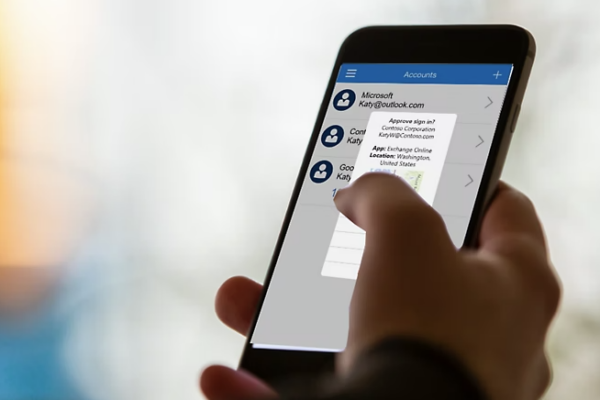
Enable Multi-Factor Authentication
Multi-factor authentication adds an additional layer of protection beyond passwords.
As a result, stolen credentials alone are often insufficient for attackers to gain access.
Conduct Security Awareness Training
Employees remain one of the strongest defenses against cyber threats.
Therefore, ongoing Security Awareness Training helps users recognize phishing attempts, suspicious communications, and social engineering tactics.
Verify Backups Regularly
A backup that has not been tested may not provide the protection an organization expects.
Consequently, businesses should routinely verify backup integrity and recovery procedures.
Strengthen Endpoint Protection
Laptops, mobile devices, and remote workstations frequently serve as entry points for cyberattacks.
Therefore, organizations should maintain updated endpoint security controls and monitoring solutions.
Review Vendor Access
Third-party access should be reviewed regularly.
In addition, organizations should remove unnecessary permissions and disable inactive accounts whenever possible.
Implement Continuous Monitoring
Cyber threats can emerge at any time.
Organizations utilizing Managed Detection and Response and 24/7 Network Monitoring services often identify suspicious activity earlier, helping reduce potential damage.
Test Incident Response Plans
Even strong security controls cannot eliminate every risk.
Therefore, organizations should periodically test incident response procedures to ensure teams know how to respond when an incident occurs.
Proactive IT Leadership to Navigate Cybersecurity and Compliance with Confidence
Work with a partner who helps you anticipate risk, make informed decisions, and plan for what’s next.
Why Proactive IT Planning Matters Before Large Regional Events
Many organizations view technology as a support function. However, technology increasingly plays a critical role in business continuity, operational efficiency, customer service, and risk management. Therefore, proactive planning should occur before challenges arise.
Organizations that engage in regular technology planning often benefit from:
Businesses that partner with experienced providers offering IT Consulting Chicago services can often align technology decisions more effectively with organizational goals. Additionally, organizations leveraging Virtual CIO Services in Chicago gain strategic technology leadership that helps support business continuity, cybersecurity planning, budgeting, and long-term operational resilience.
Why Local IT Partnerships Matter During High-Visibility Events
When technology issues occur, responsiveness matters.
Local organizations often benefit from working with a technology partner that understands the Chicago business environment and can provide both strategic guidance and operational support.
A trusted local partner may offer:
For organizations throughout Chicago, DuPage County, Oak Brook, Schaumburg, Elmhurst, Lombard, and surrounding communities, local expertise can be an important advantage when managing risk and maintaining business continuity.
Trusted By Leading Chicago Industries
See why our clients trust us to handle their most critical IT needs.
"GO managed the whole process and pushed on our vendors to find other means to get things done."
- Donna C. -
Office Leasing
"They explained technology so it was easy to understand-this gave me the confidence to make intelligent and effective business decisions."
- Earl F. -
Law Firm
"They have a huge range of knowledge which is great for problem solving our everyday issues with technology at a school."
- Brigid O. -
Education
How GO Technology Group Helps Chicago Organizations Strengthen Cybersecurity
Cybersecurity is no longer just an IT issue.
It is a business issue that affects operations, reputation, productivity, compliance, and customer trust.
GO Technology Group helps organizations throughout the Chicago area strengthen security while supporting business objectives through:

Our team works with schools, park districts, municipal governments, law firms, manufacturers, and businesses throughout the region to develop practical technology strategies that reduce risk while supporting growth.
Rather than focusing on fear, we focus on preparation, education, and proactive planning.
Because when organizations understand their risks and have a plan in place, they are better positioned to navigate both everyday challenges and periods of increased activity.
Technology Planning & Cybersecurity for Chicago-Area Businesses
Business growth, cybersecurity risks, and disaster recovery planning are closely connected. Explore GO Technology Group's guidance for Chicago and DuPage County organizations preparing for growth, disruption, and change.



Our Simple 3-Step Process
to Streamlined IT Solutions
Ready to simplify your IT? To begin, give us a quick call to schedule your technology assessment. From there, we'll explore your needs and explain how our managed IT services can help. So, get started now and see how easy it is to work with us!
Contact us
To get started, reach out to schedule a quick consultation and discuss your IT needs.
tech assessment
Next, we evaluate your current setup to identify areas for improvement.
onboarding
Finally, we seamlessly implement tailored solutions to enhance your IT infrastructure.
Frequently Asked Questions About Cybersecurity Risks During Major Public Events
Why do cyberattacks increase during major public events?
Cybercriminals often take advantage of increased travel, remote work, vendor activity, and communication volume. As a result, employees may be more distracted and more susceptible to phishing and social engineering attacks.
Is public Wi-Fi safe for business use?
Public Wi-Fi should be considered potentially insecure. Therefore, employees should use VPN connections, avoid accessing sensitive systems whenever possible, and enable multi-factor authentication.
How can businesses reduce phishing risks?
Organizations can reduce phishing risks through employee education, security awareness training, email security solutions, and strong verification procedures.
What cybersecurity protections should remote workers use?
Remote workers should utilize VPNs, multi-factor authentication, endpoint protection, secure passwords, and approved business applications.
What is business continuity planning?
Business continuity planning helps organizations maintain critical operations during disruptions such as cyberattacks, natural disasters, technology outages, or other unexpected events.
How often should organizations test disaster recovery plans?
Most organizations should review and test disaster recovery procedures at least annually. However, organizations with higher risk profiles may benefit from more frequent testing.
How does multi-factor authentication improve security?
Multi-factor authentication requires additional verification beyond a password, making it more difficult for attackers to gain unauthorized access.
What industries are most vulnerable during major public events?
Schools, municipal governments, law firms, healthcare organizations, manufacturers, community organizations, and businesses with distributed workforces may face elevated risks.
How can Chicago businesses prepare for increased cybersecurity threats?
Organizations should review security controls, conduct employee training, verify backups, test incident response procedures, and evaluate vendor access before periods of increased activity.
What role does a managed IT services provider play in cybersecurity?
A managed IT services provider helps organizations monitor systems, implement security controls, provide strategic guidance, support compliance efforts, and respond to cybersecurity incidents.
Schedule Your Cybersecurity Consultation With a Chicago Managed Services Expert