
AI Cybersecurity in Schools Chicago:
What Educators Are Asking
Introduction: A Shift Happening in Schools
Across schools in the Chicago area, conversations around technology are changing rapidly. Artificial intelligence is no longer a future concept. Instead, it is already being used in classrooms, administrative workflows, and student support systems. As a result, school leaders are now asking deeper questions about safety, oversight, and long-term impact.
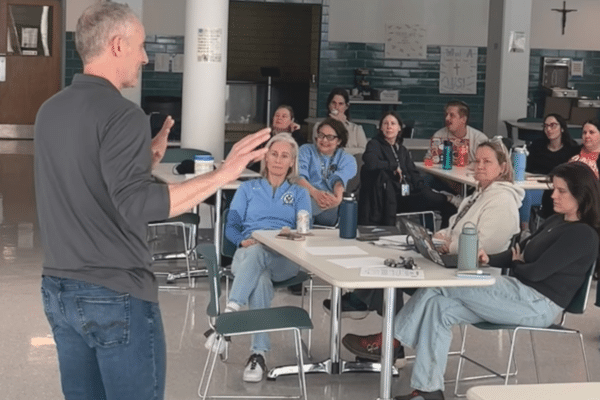
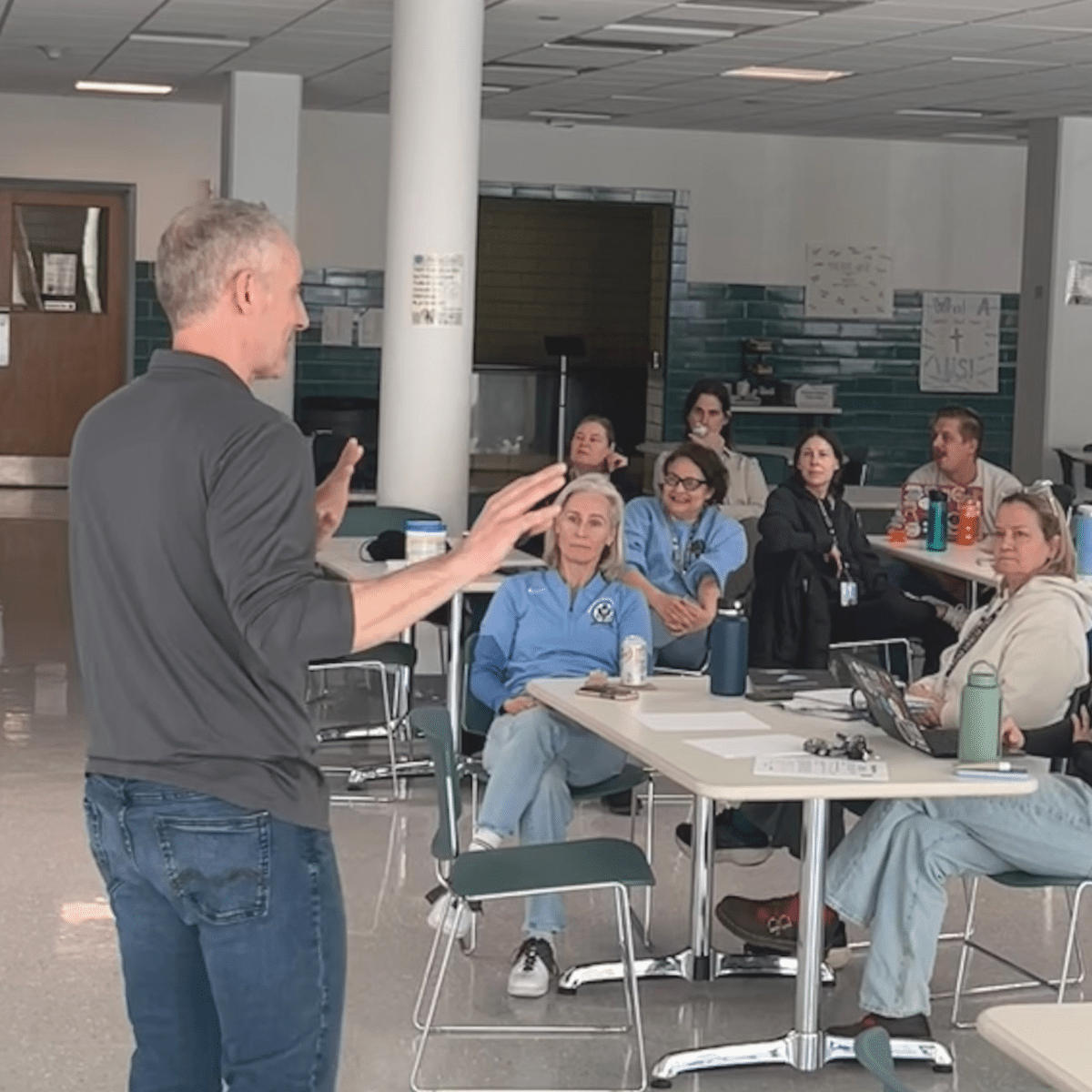
Recently, a discussion with leadership at Regina Dominican High School highlighted these themes. While the setting was a single school, the questions raised were familiar. In fact, many organizations across the region are experiencing the same challenges.
A Moment That Shifted the Room
During the session, a simple demonstration created an unexpected pause. Using a publicly available photo of a school leader, an AI tool generated a realistic video of that individual speaking. However, the content in the video was not something she actually said. As a result, the demonstration felt both impressive and concerning.
In response, educators began asking questions that changed the tone of the conversation. For example:
At that moment, the discussion shifted. AI was no longer just interesting. Instead, it became urgent.
AI Cybersecurity in Schools Chicago Is No Longer Optional
School cybersecurity is no longer just an IT responsibility. Instead, it has become a leadership-level concern that directly impacts student safety, operational continuity, and community trust. In addition, as schools adopt more digital tools, their exposure to risk continues to grow.
For example, many schools are now managing:
As a result, even small gaps in cybersecurity can create significant vulnerabilities. In addition, tools powered by AI are making phishing emails more convincing. Therefore, the risk increases for school staff who rely heavily on email communication.
What Schools Are Asking About Cybersecurity Training for Teachers
One of the most consistent themes emerging from recent conversations is the need for cybersecurity training for teachers. While educators are focused on instruction, they are also on the front lines of digital interaction with students and systems.
During the discussion, one question shifted the room:
“Do we actually know where our data goes when teachers use AI tools?”
In many cases, schools are still determining next steps. For instance, leadership teams are asking:
As a result, many organizations are recognizing that cybersecurity awareness must become part of daily operations, not just an annual requirement.

Where AI Training for Teachers Fits In
As AI tools become more accessible, schools are also exploring AI training for teachers. While these tools offer opportunities to enhance learning, they also introduce new considerations around data usage and instructional integrity.
As discussions around AI in education continue to evolve, schools are evaluating how to integrate these tools responsibly.
For instance, educators are asking:
Therefore, training is no longer just about how to use technology. Instead, it is about how to use it responsibly.
Cyberbullying, AI, and Student Safety
Another important topic that continues to surface is cyberbullying in schools. As digital communication expands, so do the risks associated with student interactions online. As a result, student use of AI-generated content—both text and video—can introduce new challenges that extend beyond the classroom.
In addition, AI tools can complicate this landscape by enabling new forms of content creation. Therefore, schools are re-evaluating their approaches to preventing cyberbullying and maintaining safe digital environments.
Leadership teams are increasingly focused on:
Cybersecurity for School Districts Is Expanding
At a broader level, cybersecurity for school districts is becoming more complex. While individual schools face challenges, district-level leadership must consider system-wide risks, compliance requirements, and resource limitations.
For example, districts are balancing:
As a result, many are seeking guidance on how to prioritize initiatives and build sustainable strategies.

What These Conversations Signal
Taken together, these discussions point to a larger shift. Schools are not just adopting technology. Instead, they are being asked to govern it effectively.
In addition, leadership teams are recognizing that:
Therefore, the challenge is not whether to adopt new tools. Rather, it is how to do so with clarity and confidence.
Where Schools Can Start Right Now
While these challenges can feel complex, schools do not need to solve everything at once. Instead, taking a few clear steps can help create immediate progress.
For example, schools can begin by:
In addition, leadership teams can create space for ongoing conversation. As a result, staff feel supported rather than restricted. Therefore, policies can evolve alongside real-world use.
Supporting Schools Through AI and Cybersecurity Challenges
Through conversations like these across the Chicago area, organizations are seeking practical guidance to navigate change. Rather than focusing solely on technology, the emphasis is increasingly on aligning tools with goals, policies, and people.
Through these conversations, schools are increasingly seeking guidance through AI consulting Chicago engagements that prioritize clarity and responsible implementation. In addition, many organizations are turning to cybersecurity consulting Chicago providers to strengthen their approach to risk management and data protection.
As a managed service provider Chicago organizations rely on, GO Technology Group often supports schools through IT consulting Chicago engagements that prioritize clarity, security, and long-term sustainability. In addition, through IT managed services Chicago, schools can implement solutions that balance innovation with protection.
Conclusion: Continuing the Conversation
These conversations reflect similar themes discussed in recent sessions on AI and cybersecurity education in Wilmette, AI and cybersecurity awareness in Addison, and AI and cybersecurity awareness Arlington Heights, as well as broader discussions around cybersecurity for park districts.
If these questions are coming up within your school or district, you are not alone. Across Chicago, educators and administrators are working to better understand how AI and cybersecurity intersect in real-world environments.
As technology continues to evolve, these conversations will continue as well. However, with the right approach, schools can move forward with confidence while maintaining a strong foundation of security and trust.
If these questions are coming up within your school or district, you are not alone. Across Chicago, educators and administrators are working to better understand how AI and cybersecurity intersect in real-world environments.
As technology continues to evolve, these conversations will continue as well. However, with the right approach, schools can move forward with confidence while maintaining a strong foundation of security and trust.
Trusted By Leading Chicago Industries
See why our clients trust us to handle their most critical IT needs.
"GO managed the whole process and pushed on our vendors to find other means to get things done."
- Donna C. -
Office Leasing
"They explained technology so it was easy to understand-this gave me the confidence to make intelligent and effective business decisions."
- Earl F. -
Law Firm
"They have a huge range of knowledge which is great for problem solving our everyday issues with technology at a school."
- Brigid O. -
Education
Partners






Proactive IT Leadership to Navigate Cybersecurity and Compliance with Confidence
Work with a partner who helps you anticipate risk, make informed decisions, and plan for what’s next.
Optimize Your Chicago Business:
MSP Tips, Security News, and IT Solutions


Stay Secure and Informed with Proactive IT Insights
Join other Chicago-area leaders receiving quarterly insights from GO Technology Group. The Proactive Edge newsletter delivers practical tips, cybersecurity alerts, and expert guidance to help you reduce downtime, protect systems, and plan with confidence.
FAQ: AI Cybersecurity in Schools Chicago – Key Questions for Educators
What is AI cybersecurity in schools Chicago?
AI cybersecurity in schools Chicago refers to the strategies and practices used to protect student data, staff systems, and digital tools while adopting artificial intelligence in educational environments.
Why is cybersecurity training for teachers important?
Cybersecurity training for teachers is critical because educators interact with digital systems daily. As a result, proper training helps reduce risks such as phishing, data exposure, and unauthorized access.
How does AI impact school cybersecurity?
AI introduces new risks related to data sharing, third-party platforms, and automation. Therefore, schools must evaluate tools carefully and implement policies to protect sensitive information.
What should schools consider when implementing AI tools?
Schools should consider data privacy, vendor policies, student safety, and staff training before adopting AI tools. In addition, they should ensure alignment with existing cybersecurity frameworks.
How can schools prevent cyberbullying in digital environments?
Preventing cyberbullying in schools requires a combination of monitoring tools, student education, and clear policies. As digital communication increases, proactive strategies become even more important.
What role do managed IT services play in school cybersecurity?
Managed IT services Chicago providers help schools monitor systems, implement security measures, and provide ongoing support. As a result, schools can focus on education while maintaining strong cybersecurity practices.
Our Simple 3-Step Process
to Streamlined IT Solutions
Ready to simplify your IT? To begin, give us a quick call to schedule your technology assessment. From there, we'll explore your needs and explain how our managed IT services can help. So, get started now and see how easy it is to work with us!
Contact us
To get started, reach out to schedule a quick consultation and discuss your IT needs.
tech assessment
Next, we evaluate your current setup to identify areas for improvement.
onboarding
Finally, we seamlessly implement tailored solutions to enhance your IT infrastructure.